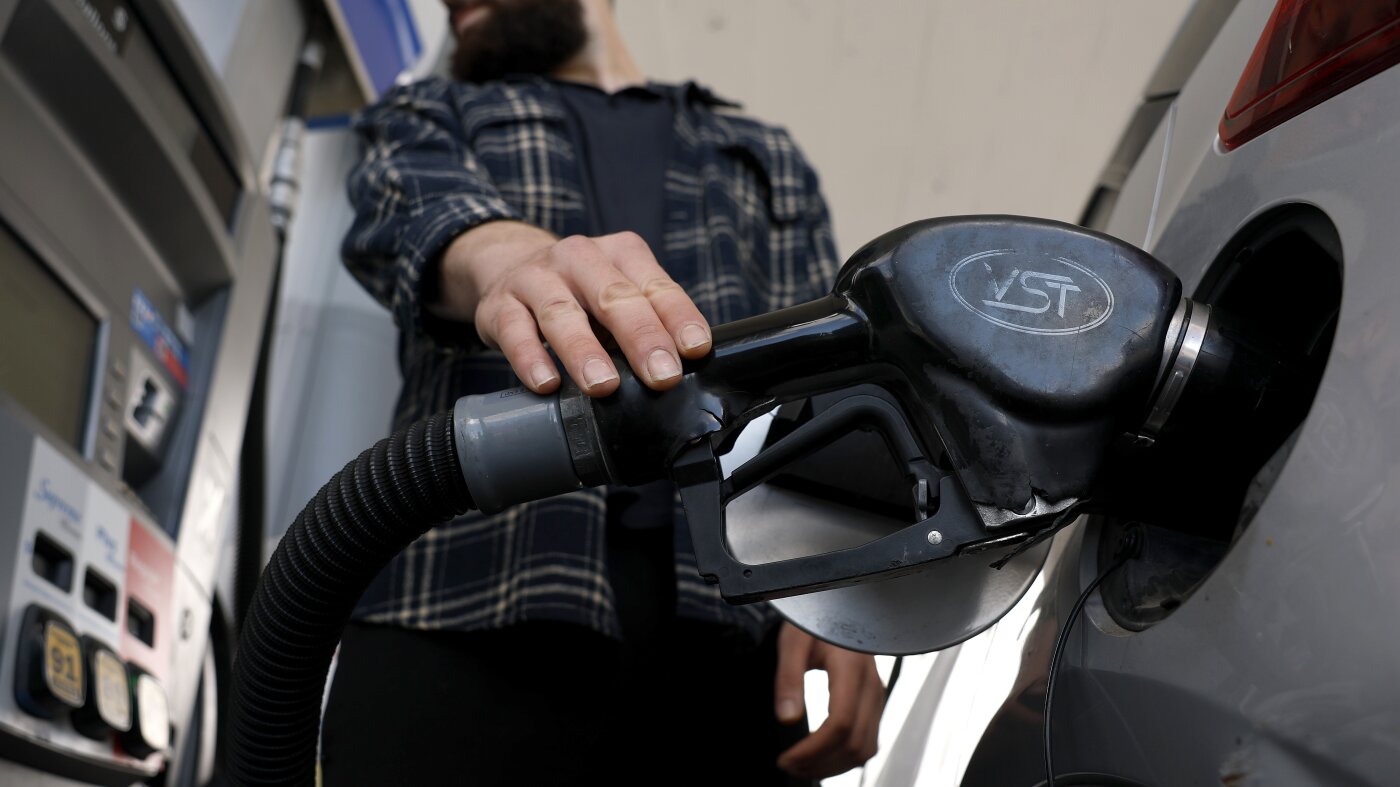
Soaring Gas Prices Prompt Consumer - is tied to revenue growth, EPS performance, and forward guidance analysis in broader financial markets. With the U.S. national average for regular gasoline reaching $4.55 per gallon ahead of a major holiday travel weekend, consumers are exploring various methods to reduce fuel expenses. Options highlighted include adjusting driving habits, considering electric vehicle adoption, and reducing overall vehicle usage to curb spending.
Live News
Soaring Gas Prices Prompt Consumer - is tied to revenue growth, EPS performance, and forward guidance analysis in broader financial markets. Investors these days increasingly rely on real-time updates to understand market dynamics. By monitoring global indices and commodity prices simultaneously, they can capture short-term movements more effectively. Combining this with historical trends allows for a more balanced perspective on potential risks and opportunities. As the United States approaches one of its busiest travel periods, the national average price for a gallon of regular gasoline has recently reached $4.55, according to the latest available data. This elevated cost is prompting households to evaluate practical steps to manage their fuel budgets. Several approaches have been identified, each with different levels of potential savings and lifestyle adjustments. One commonly suggested method involves modifying driving behavior. Slowing down on highways, maintaining steady speeds, and avoiding rapid acceleration can improve fuel efficiency. The U.S. Department of Energy notes that aggressive driving can lower gas mileage by roughly 15–30% at highway speeds and 10–40% in stop-and-go traffic. Another path is the shift toward electric vehicles (EVs). While the upfront purchase price of an EV may be higher, the cost of electricity per mile is typically lower than gasoline. Additionally, some states and utilities offer incentives for EV adoption, though availability varies. For some, the most immediate solution is simply driving less. Options such as carpooling, using public transit, combining errands into fewer trips, or working from home when possible can significantly reduce fuel consumption. The choice depends on individual circumstances and local infrastructure.
Soaring Gas Prices Prompt Consumer Strategies for Cost Savings Using multiple analysis tools enhances confidence in decisions. Relying on both technical charts and fundamental insights reduces the chance of acting on incomplete or misleading information.Access to global market information improves situational awareness. Traders can anticipate the effects of macroeconomic events.Soaring Gas Prices Prompt Consumer Strategies for Cost Savings Correlating global indices helps investors anticipate contagion effects. Movements in major markets, such as US equities or Asian indices, can have a domino effect, influencing local markets and creating early signals for international investment strategies.Correlating global indices helps investors anticipate contagion effects. Movements in major markets, such as US equities or Asian indices, can have a domino effect, influencing local markets and creating early signals for international investment strategies.
Key Highlights
Soaring Gas Prices Prompt Consumer - is tied to revenue growth, EPS performance, and forward guidance analysis in broader financial markets. Access to multiple perspectives can help refine investment strategies. Traders who consult different data sources often avoid relying on a single signal, reducing the risk of following false trends. Key takeaways from the current situation suggest that no single strategy fits all consumers. For drivers who cannot change their vehicle or commute, behavioral adjustments—such as reducing speed and maintaining tires at proper inflation—may offer incremental savings. Each 5 mph driven over 50 mph can be roughly equivalent to paying an extra $0.20 per gallon based on typical efficiency losses. For those considering a long-term investment, electric vehicles could provide more substantial fuel cost reductions, especially in regions where electricity rates are low. However, the initial purchase cost and charging infrastructure availability remain barriers for many households. Broader implications for the transportation sector include increased consumer interest in fuel efficiency and alternative powertrains. This shift may influence automakers’ production plans. Additionally, sustained high gasoline prices could accelerate policy discussions around fuel economy standards and EV charging network expansion.
Soaring Gas Prices Prompt Consumer Strategies for Cost Savings Investors often balance quantitative and qualitative inputs to form a complete view. While numbers reveal measurable trends, understanding the narrative behind the market helps anticipate behavior driven by sentiment or expectations.Combining technical and fundamental analysis allows for a more holistic view. Market patterns and underlying financials both contribute to informed decisions.Soaring Gas Prices Prompt Consumer Strategies for Cost Savings Monitoring commodity prices can provide insight into sector performance. For example, changes in energy costs may impact industrial companies.Predicting market reversals requires a combination of technical insight and economic awareness. Experts often look for confluence between overextended technical indicators, volume spikes, and macroeconomic triggers to anticipate potential trend changes.
Expert Insights
Soaring Gas Prices Prompt Consumer - is tied to revenue growth, EPS performance, and forward guidance analysis in broader financial markets. The increasing availability of analytical tools has made it easier for individuals to participate in financial markets. However, understanding how to interpret the data remains a critical skill. From an investment perspective, the elevated gasoline prices may have ripple effects across multiple industries. Companies in the oil and gas sector could potentially benefit from higher margins, while those in the EV and battery supply chain might see increased demand. However, any such outcomes are highly dependent on future price movements and regulatory changes. Consumers should evaluate their own driving patterns before making significant changes. For many, a combination of strategies—such as reducing highway speed, combining trips, and keeping vehicles well-maintained—could offer the most balanced approach to saving money. It remains uncertain how long the current price levels will persist, as global supply dynamics and seasonal factors influence gasoline costs. Ultimately, the decision to drive slower, switch to an electric vehicle, or simply drive less hinges on individual priorities and financial circumstances. The current environment highlights the importance of energy conservation and alternative mobility options. Disclaimer: This analysis is for informational purposes only and does not constitute investment advice.
Soaring Gas Prices Prompt Consumer Strategies for Cost Savings Some investors track currency movements alongside equities. Exchange rate fluctuations can influence international investments.Cross-asset analysis helps identify hidden opportunities. Traders can capitalize on relationships between commodities, equities, and currencies.Soaring Gas Prices Prompt Consumer Strategies for Cost Savings Diversifying the type of data analyzed can reduce exposure to blind spots. For instance, tracking both futures and energy markets alongside equities can provide a more complete picture of potential market catalysts.Predictive analytics combined with historical benchmarks increases forecasting accuracy. Experts integrate current market behavior with long-term patterns to develop actionable strategies while accounting for evolving market structures.